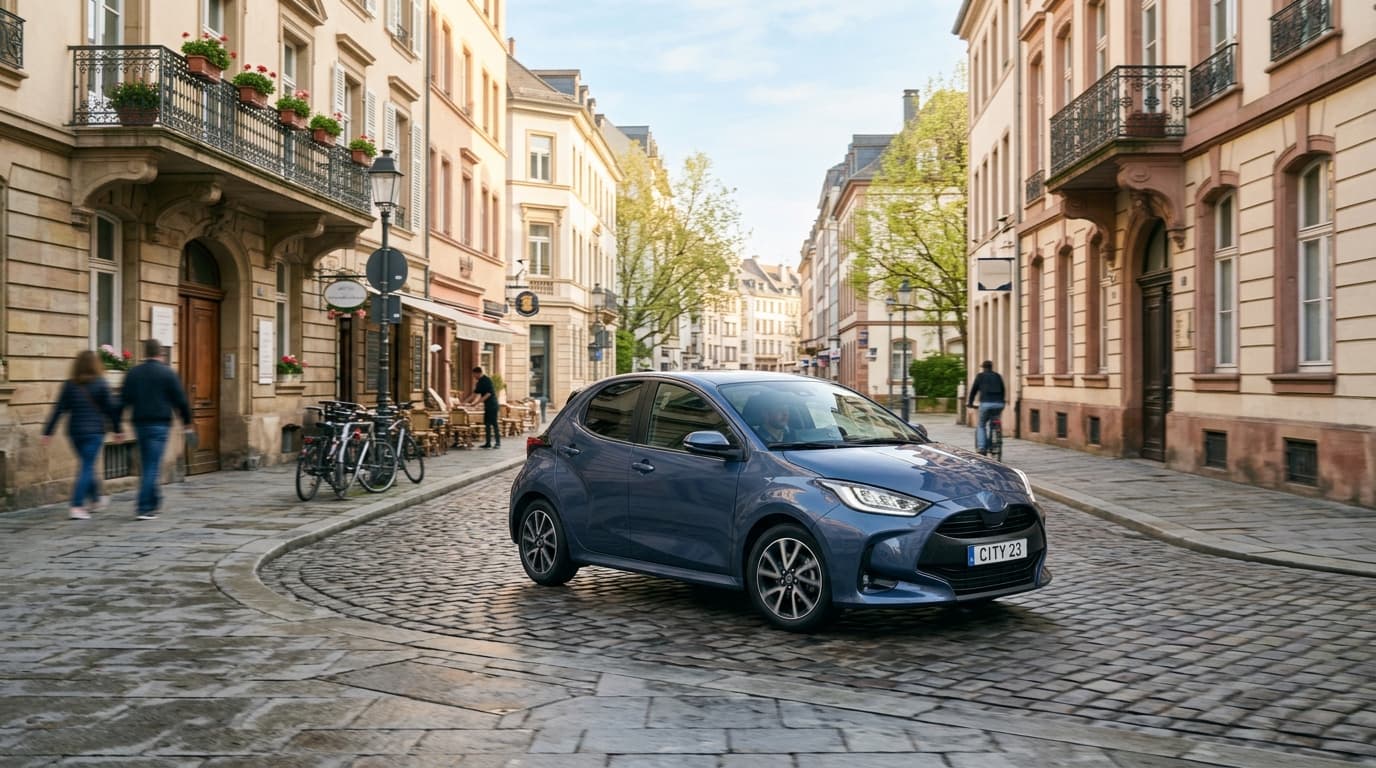
For city driving, the best hybrid city car is the one that spends the most time on electric at low speed and stays simple to live with. In short: in Belgium, the Toyota Yaris Hybrid, the Renault Clio E-Tech and the Honda Jazz e:HEV cover most of an urban driver's needs, with no charging point or socket. What's left is choosing by budget and real-world use.
Which hybrid city car should you choose for the city?
The best urban hybrid city car is a full hybrid that drives on electric alone in traffic. The Toyota Yaris Hybrid leads, ahead of the Renault Clio E-Tech and the Honda Jazz e:HEV, three models that need no charging at all.
Urban logic is not the same as a motorway buyer's. In the city, you pull away, stop and pull away again dozens of times per trip. That is exactly where a hybrid helps most: the electric motor takes over at low speed and the petrol engine shuts off when stopped. Fuel use drops right where a regular petrol car drinks the most.
So what does that look like day to day? On a stop-start urban trip, a Yaris Hybrid often stays below 4 L/100 km, while a small non-hybrid petrol easily climbs to 6 L. For a mild hybrid such as the Peugeot 208 or the Hyundai i20, the gain is real but smaller, because those models never drive on electric alone.
| Model | Hybrid type | Real city use | Belgian price (from) | Best for |
|---|---|---|---|---|
| Toyota Yaris Hybrid | Full hybrid | 3.7 to 4.0 L/100 km | ~€25,000 | dense city, economy, reliability |
| Renault Clio E-Tech | Full hybrid | 4.3 to 4.5 L/100 km | ~€24,600 | city-and-road mix, boot |
| Honda Jazz e:HEV | Full hybrid | ~4.5 L/100 km | ~€29,000 | space, comfort, visibility |
| Peugeot 208 / Hyundai i20 | Mild hybrid 48V | 5.5 to 6 L/100 km | from ~€20,000 | tight budget, low premium |
Full hybrid or mild hybrid: what's the difference in the city?
The difference is clear: a full hybrid drives on electric alone at low speed, a mild hybrid does not. In the city, that gap shows up directly at the pump and on the fuel-use readout.
A full hybrid carries a battery and an electric motor strong enough to move the car without petrol for a few hundred metres, on pull-away and in traffic. The Yaris, the Clio E-Tech and the Jazz all work this way. A mild hybrid only adds a small 48-volt starter-generator that assists the petrol engine and manages stop-start: the car always moves thanks to the combustion engine. That covers most Peugeot 208, petrol Renault Clio, Volkswagen Polo and Hyundai i20 models.
On budget, the mild hybrid is cheaper, often €2,000 to €3,000 less than a comparable full hybrid. But in heavy urban use, the fuel saving is roughly half as big. If your trips are mostly stops and low speeds, the full hybrid earns back its premium; if you drive little or mostly on the open road, a mild hybrid is enough.
How much does a hybrid city car really use in town?
In real urban use, a recent full hybrid uses between 3.7 and 4.5 L/100 km. It is in the city, not on the motorway, that these figures are lowest, the opposite of a regular petrol car.
Combined WLTP (the official EU test cycle) figures sit around 4.3 L/100 km for the Yaris, 4.4 for the Clio E-Tech and 4.5 for the Jazz. In real conditions, the Yaris Hybrid often drops below 4 L in town, sometimes around 3.7 L on slow, frequent trips. The Clio and the Jazz stay close to 4.5 L, which is still very low for cars that never need plugging in.
The Belgian maths is telling. At €1.75 per litre of petrol in early 2026, 4 L/100 km costs €7 per 100 km, against €10 to €11 for a small petrol using 6 L in town. Over 12,000 km a year of mostly city driving, the gap tops €400 in fuel per year. Add reduced brake wear, because regenerative braking slows the car without using the pads.
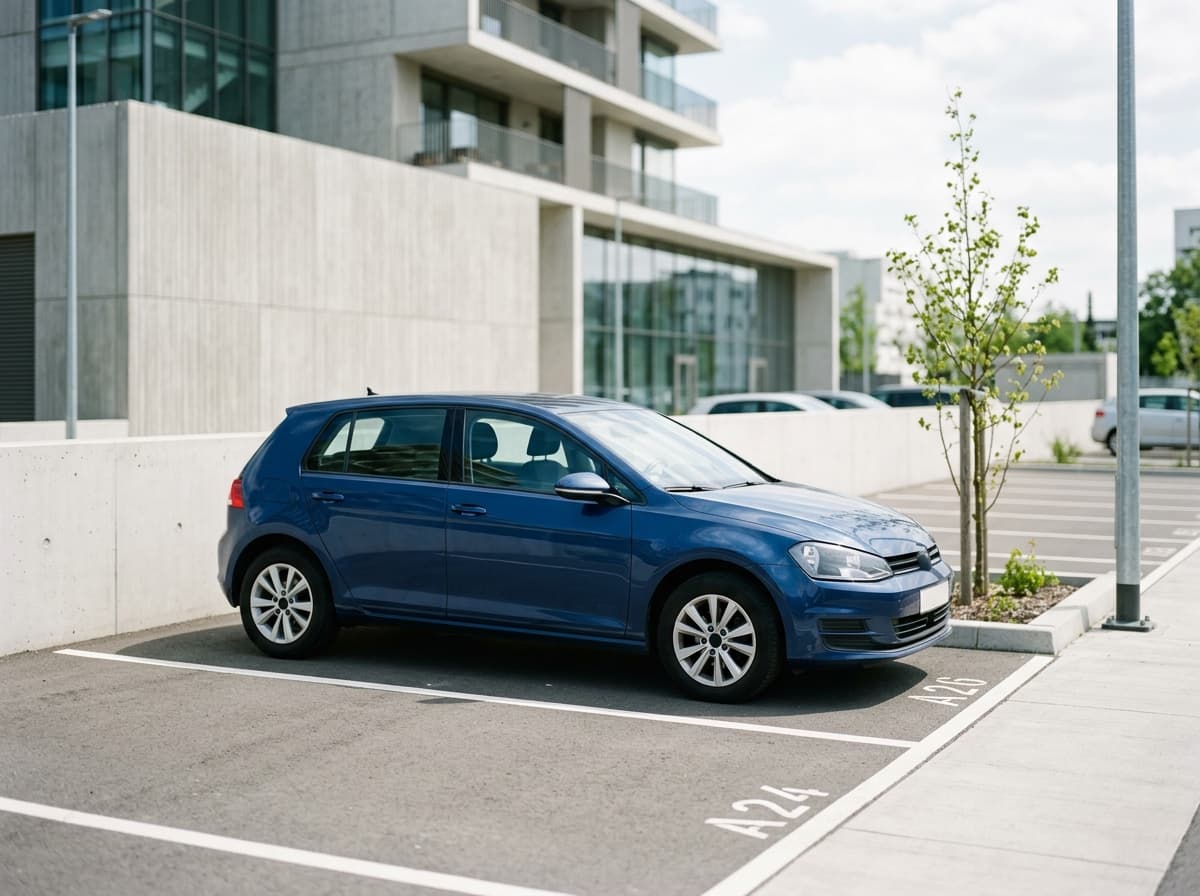
Toyota Yaris, Renault Clio E-Tech or Honda Jazz: which one for the city?
For strictly urban use, the Toyota Yaris Hybrid is the most rational choice; the Renault Clio E-Tech wins once you add road miles, the Honda Jazz when space matters most. All three are full hybrids with no charging.
The Yaris uses the least fuel in town and has the best reliability in its class: it comes out No. 1 among city cars in the 2026 TÜV Report, with a fault rate of about 2% on 2-to-3-year-old cars. Its known flaw is an engine that revs up and gets loud under hard acceleration, barely an issue in the city.
The Clio E-Tech plays the versatility card: a 391 L boot, better ride comfort and a smooth drive that make it more pleasant as soon as you leave town. The Jazz e:HEV takes a different path with its benchmark interior space, visibility and modularity, at the cost of a higher price and a less mainstream style. If you're torn between profiles, our city car quiz helps decide in a few questions.
How much does a hybrid city car cost in Belgium?
A hybrid city car sells for between €24,000 and €30,000 new in early 2026 in Belgium, depending on model and trim. The Clio E-Tech and the Yaris Hybrid open the range, the Honda Jazz sits higher.
As a guide, the Renault Clio E-Tech starts around €24,600, the Toyota Yaris Hybrid around €25,000, and the Honda Jazz e:HEV closer to €29,000. These prices shift with promotions and trims: Le Moniteur Automobile publishes up-to-date new prices, worth checking before you buy. Against them, the petrol mild hybrids of the Peugeot 208 or the Hyundai i20 start lower, often around €20,000.
The sticker price isn't everything. The real cost of a city car is insurance and servicing, not just the list price. A hybrid costs a little more to insure than a petrol car of the same value, but its servicing stays reasonable and its brakes last longer. In Belgium, its low CO2 emissions also cut the registration tax (taxe de mise en circulation) in several cases. To compare calmly, use our ranking of the best city cars and put the models side by side in the city car comparator on price, fuel use and boot.
Is a hybrid worth it for 100% urban use?
Yes, a hybrid is exactly at its best in 100% urban use. It is the only setting where a full hybrid drives on electric a large share of the time, which sends fuel use and noise plunging.
The tipping point depends on your mileage. If you drive a lot in the city, 12,000 km a year or more, the fuel saving and reduced wear quickly offset the purchase premium. Below 6,000 km a year, the case is weaker, and a frugal small petrol or a mild hybrid may be enough. Comfort counts too: driving in silence in traffic, with no gearbox jolts, changes daily life more than you'd expect.
One honest marker to finish: if your use leans toward the motorway, a hybrid loses its edge and a frugal petrol comes out even. The urban hybrid is not the fastest or the longest-legged, it is the one that turns slow, broken-up trips into saved fuel. For a Belgian driver who lives mostly in the city, that's most often the Toyota Yaris Hybrid, the Renault Clio E-Tech in its more versatile form, or the Honda Jazz when cabin space comes first.
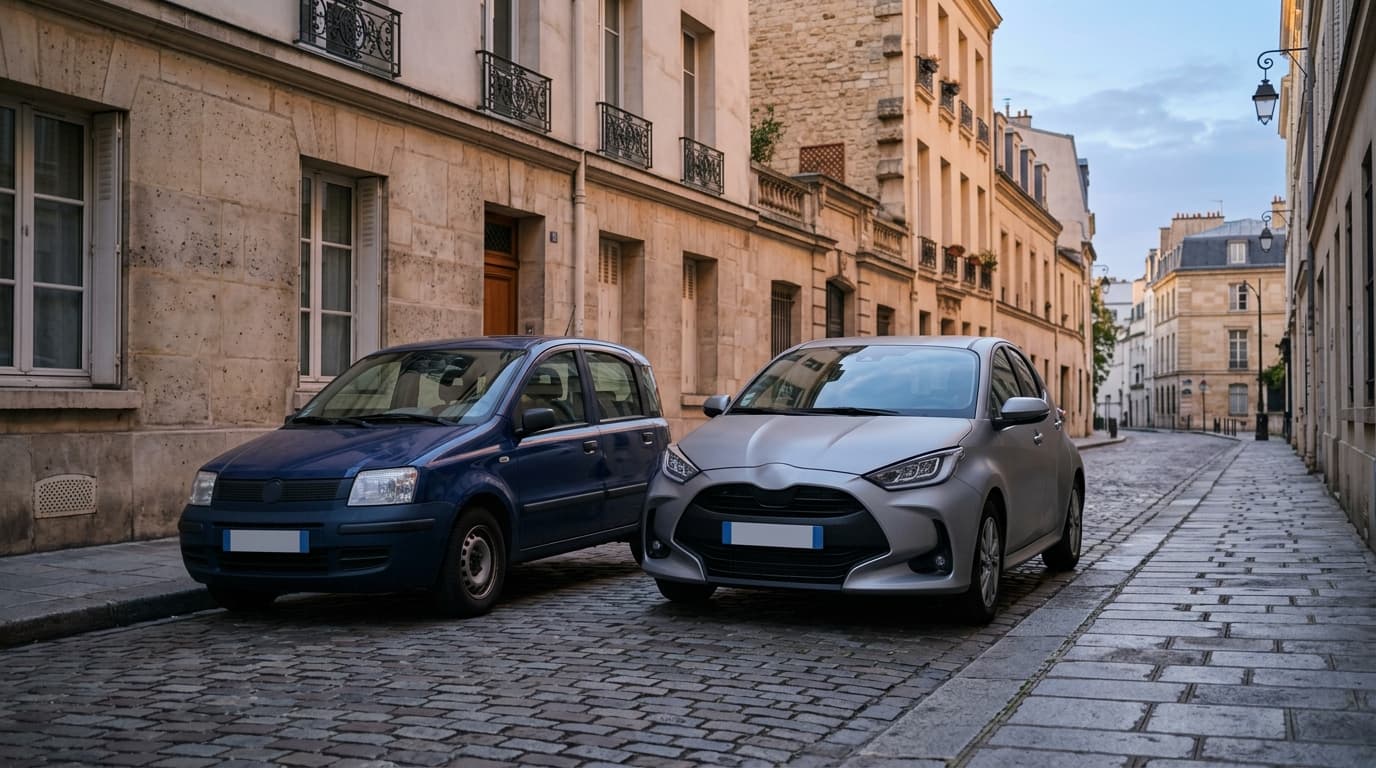
Essence & hybride comparator
Compare all essence & hybride side by side.
Compare now →
Frequently asked questions
Léa suit le marché des petites voitures depuis 2014. Basée à Liège, elle roule au quotidien en citadine et passe ses week-ends à comparer autonomies réelles, coffres et coûts d’entretien. Elle teste surtout ce qu’on utilise vraiment en ville : créneaux serrés, recharge en copropriété, trajets courts et budget assurance jeune conducteur.