
For a commute, the best electric city car is the one that covers your daily distance without charging stress and that you plug in at home or at work. In short: in Belgium, the Dacia Spring, the Citroën ë-C3, the Renault 5 E-Tech and the Hyundai Inster cover most commuter needs. What remains is matching range and budget to your trip.
Which electric city car should you choose to get to work?
Aim for a city car whose real-world range comfortably exceeds your daily round trip, with simple charging at home or at work. For most Belgian commuters, the Citroën ë-C3 and the Renault 5 E-Tech offer the best balance of price, range and comfort.
The logic differs from a "fun" purchase. A commuter drives a lot, often the same route, and mainly wants to avoid running out of charge on a Monday morning. The right range is therefore not the biggest possible, but the one that absorbs two days of driving without charging, winter margin included.
In practice, for 40 km a day round trip, a Dacia Spring (from EUR 16,900 in 2026) is enough. For 70 to 90 km with some motorway, the Citroën ë-C3 and its 320 km WLTP are more relaxed. And if your trip exceeds 100 km or regularly carries passengers, the Hyundai Inster 49 kWh justifies its premium.
| Model | Starting price (2026) | WLTP range | Fast charging | Best for |
|---|---|---|---|---|
| Dacia Spring | from EUR 16,900 | ~225 real km | 30 kW | short, urban trips (< 60 km/day) |
| Citroën ë-C3 | from EUR 23,300 | 320 km | 100 kW | versatile commute, city + motorway |
| Renault 5 E-Tech | from ~EUR 25,000 | up to ~400 km | 100 kW | high mileage, comfort |
| Hyundai Inster 49 kWh | from ~EUR 27,500 | > 350 km | 85 kW | long trips, regular passengers |
How much does charging an electric city car cost for a Belgian commuter?
Charged at home at EUR 0.30/kWh, an electric city car costs about EUR 5 per 100 km, or nearly EUR 60 a month for a commuter driving 15,000 km a year. An equivalent petrol costs roughly double on the same route.
The maths is simple: a small electric uses around 17 kWh per 100 km. At EUR 0.30/kWh on a standard tariff, that is EUR 5.10 per 100 km. In petrol, 100 km costs closer to EUR 8 to 12 at 2024-2025 Belgian prices. The gap widens further if you charge at night on a dual-hourly tariff or with solar panels.
Watch out for motorway fast charging, though: at EUR 0.55 or 0.70/kWh on public chargers, electric loses much of its advantage. For a commuter, the benefit comes down to one thing: plugging in where electricity is cheap, not at an overpriced top-up charger.
Should you charge at home or at work?
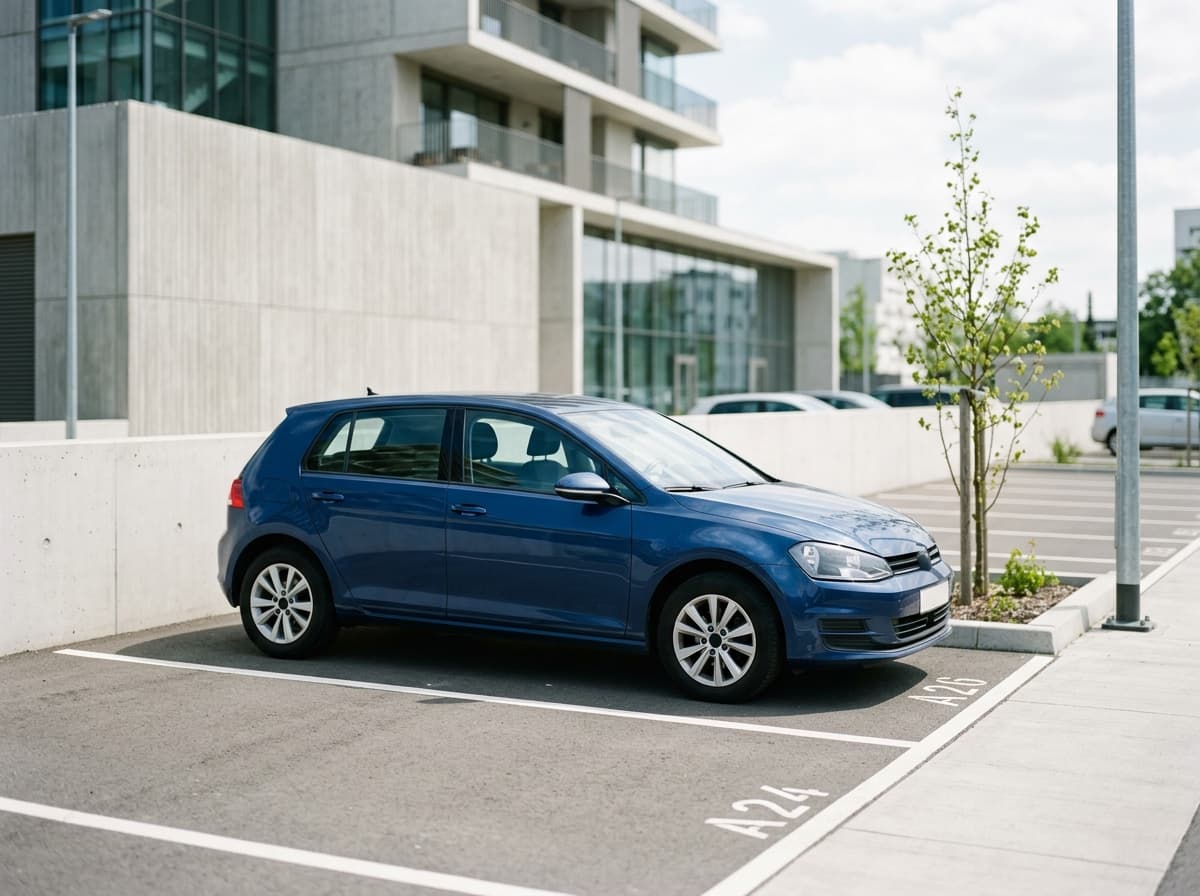
Both work, and that is exactly what makes electric appealing for a commuter. If you can plug in at home on a wallbox, you leave every morning with a full battery and the lowest cost.
A 7 to 22 kW wall charger costs between EUR 800 and EUR 2,500 installed in Belgium. It is an investment, but it pays off quickly when you drive every day. In a flat with no private charger, electric is still viable on one condition: charging elsewhere regularly.
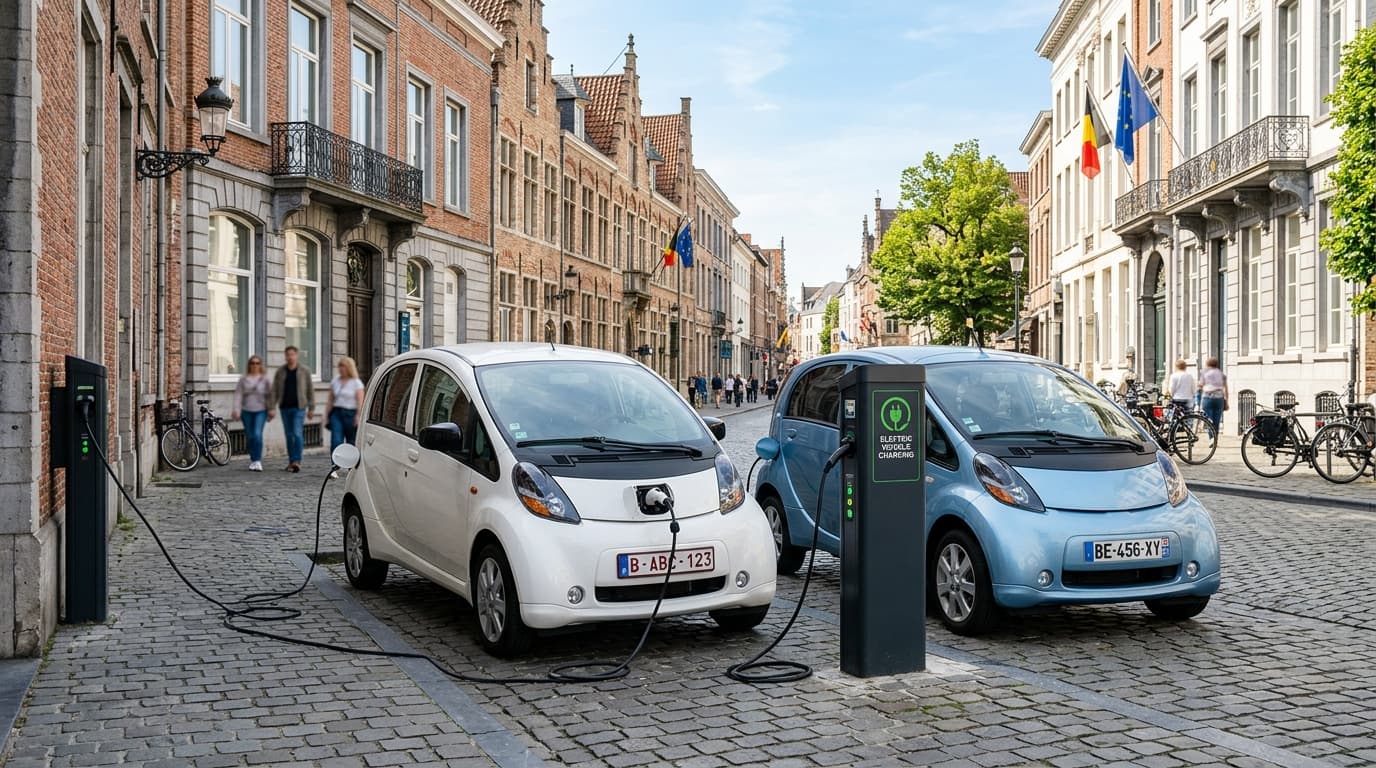
This is where the commute changes everything. Many Belgian employers install free chargers in the company car park. If that is your case, the energy cost falls to almost nothing and the home-charger question becomes secondary. Check before buying: this perk is sometimes worth more than 500 km of range.
What range should you aim for on a commute?
Take your daily round trip, multiply it by two, then add the winter margin. In practice, 200 real km is enough under 40 km a day; above 100 km a day, do not drop below 300 km WLTP.
The winter margin is no small detail in Belgium. With heating and motorway driving, an electric loses 25 to 35% of its range between July and January. A city car rated at 320 km WLTP drops to around 210 to 240 real km in cold weather with the heating on.
A concrete example: a Liège-Namur commuter covers about 120 km round trip. On paper, a Dacia Spring "makes it". In January, with heating and 120 km/h on the E42, its real range gets tight and forces almost daily charging. A ë-C3 or a Renault 5 handle the same trip without a thought. The rule: never pick a city car whose winter range exactly matches your need.
Dacia Spring or Citroën ë-C3 for a commuter?
It all depends on distance. The Dacia Spring wins on price and monthly budget; the Citroën ë-C3 wins as soon as the trip gets longer or uses the motorway. For an average commuter, the ë-C3 is the more reassuring choice.
The Spring is the bare-essentials approach: light, from EUR 16,900, unbeatable on purchase cost and perfect for short urban trips. Its limit shows quickly outside the city: modest range and fast charging capped at 30 kW, which lengthens stops on long trips.
The ë-C3 plays the versatility card: 320 km WLTP, a genuine 310 L boot, suspension comfort that is rare at this price, and 100 kW fast charging that makes it credible even when the day runs beyond the usual route. For EUR 6,000 more, you mainly buy peace of mind. If you are still torn between profiles, our city car quiz narrows the choice in a few questions.
The real monthly cost of a commuter's electric city car
The sticker price says little about the real budget. The true cost is the sum of the monthly payment (or depreciation), insurance, charging and servicing, and this is where electric regains the advantage over time.
On servicing, an electric city car costs less: no oil changes, fewer wear parts, brakes that last thanks to regenerative braking. On energy, as we saw, a home charge is twice as cheap as a tank of petrol. Insurance stays close to that of an equivalent combustion car, sometimes slightly higher because of the vehicle's value.
The tipping point depends on your mileage. A commuter driving 15,000 to 20,000 km a year and charging at home recovers the higher purchase price within a few years. Below 8,000 km a year with no private charger, the case is less clear. To compare calmly, lean on our ranking of the best city cars and line the models up in the city car comparator on price, range and consumption.
In short, the ideal electric city car for commuting is not the one with the most range, but the one that covers your trip with a margin, charges where electricity is cheap, and keeps the monthly budget under control. For a Belgian commuter, that is usually the Citroën ë-C3 or the Renault 5 E-Tech, the Dacia Spring for short trips and the Hyundai Inster for long distances.
Citadines électriques comparator
Compare all citadines électriques side by side.
Compare now →
Frequently asked questions
Léa suit le marché des petites voitures depuis 2014. Basée à Liège, elle roule au quotidien en citadine et passe ses week-ends à comparer autonomies réelles, coffres et coûts d’entretien. Elle teste surtout ce qu’on utilise vraiment en ville : créneaux serrés, recharge en copropriété, trajets courts et budget assurance jeune conducteur.