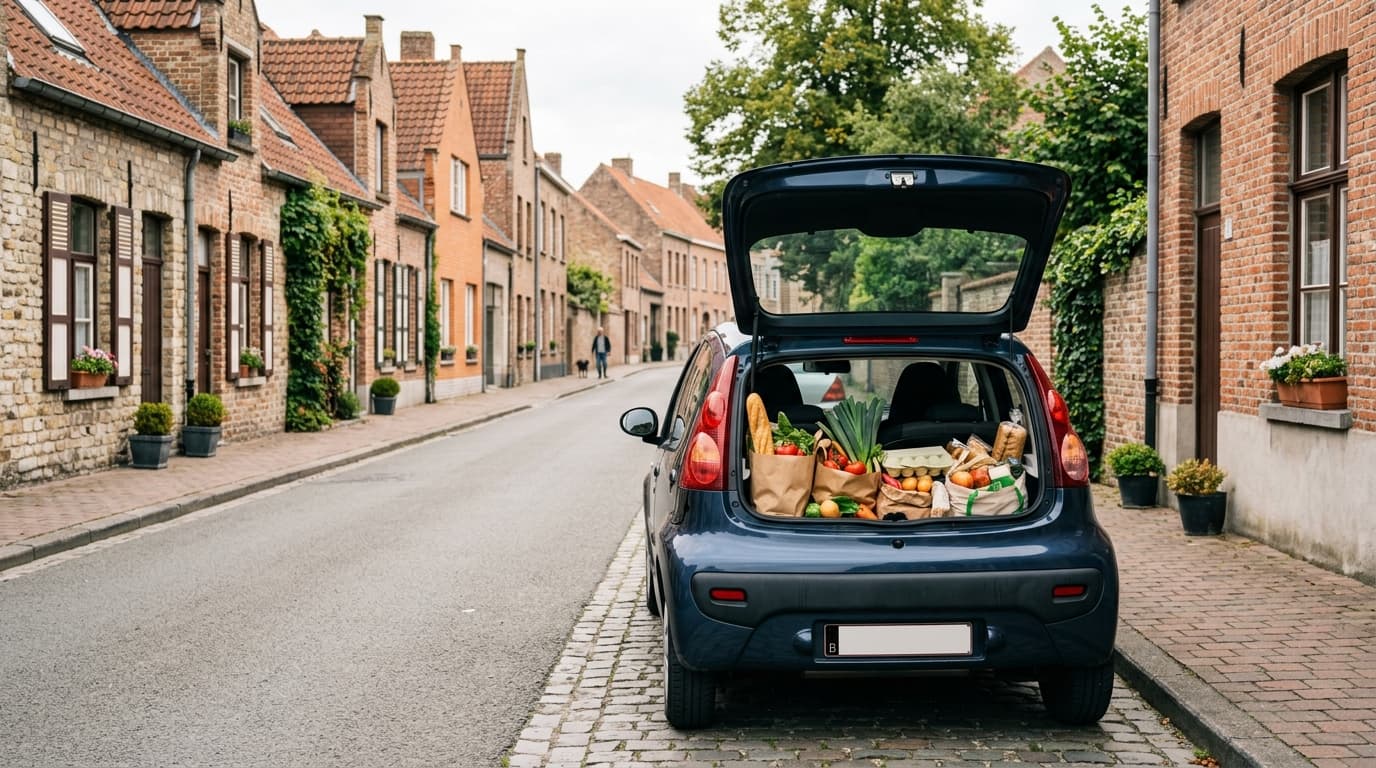
For a family, the best city car is the one that swallows a boot of shopping, two child seats and a reasonable monthly budget. In Belgium, the Renault Clio, Škoda Fabia and Volkswagen Polo tick the most boxes; the Dacia Sandero keeps the price advantage. It all depends on your children's ages and your trips.
What is the best city car for a family?
For most Belgian families with one or two children, the Renault Clio and Škoda Fabia offer the best balance: big boot, decent rear seats and complete safety kit. The Volkswagen Polo takes the lead on space, the Dacia Sandero on price.
A family city car isn't the biggest car possible, it's the one that stays easy to park while absorbing family life. The real deciding factor is the boot and the width of the rear bench, not overall length. A well-designed city car fits a pram, two child seats and the Saturday shopping bag without turning every outing into Tetris.
So what does that look like day to day? The Clio and Fabia play on a boot close to 390 litres, the most generous space in the class. The Polo bets on slightly wider rear seats, welcome as children grow. The Sandero offers the essentials for several thousand euros less.
| Model | Boot | Starting price (Belgium, 2026) | Family strength |
|---|---|---|---|
| Renault Clio | 391 L | from ~€21,000 | biggest boot, frugal hybrid |
| Škoda Fabia | 380 L | from ~€22,500 | roominess and versatility |
| Volkswagen Polo | ~351 L | from ~€24,000 | most reassuring rear seats |
| Dacia Sandero (Stepway) | 328 L | from ~€17,300 | the lowest price |
| Peugeot 208 | 311 L | from ~€22,000 | style and screen, tighter boot |
New prices shift with trims and promotions: Le Moniteur Automobile publishes up-to-date figures, worth checking before you buy.
How much boot space do you need for a family?
Aim for at least 350 litres. Below that, a "classic" pram already fills the boot and little room is left for shopping or a weekend's luggage.
The catalogue figure hides a real-world truth: what matters is the shape of the boot and the height of the sill, not just the litres. A square boot with a low sill swallows a folded pram far better than a slanted boot that's larger on paper. The Clio and Fabia do best here; the Polo follows closely.
Take a concrete case. A folded compact pram takes up roughly 40 to 50 litres and quickly spreads sideways. In a Peugeot 208 (311 L), it leaves little room for a full shopping trolley. In a Clio (391 L) or Fabia (380 L), there's still space to slide the weekly shop alongside. If you often go away as a four, it's that 80-litre delta that changes everything.
Can you fit two child seats in a city car?
Yes, two child seats install without trouble on the outer rear seats, fitted with Isofix mounts on nearly every city car sold today. The real point to watch is the third passenger in the middle.
A city car's rear bench is narrow: two child seats side by side take up almost the full width. Slotting an adult or a third seat between them is a feat in a Clio, a 208 or a Sandero. For a family of four, no problem; for three children, a city car quickly shows its limits.
Another detail that costs dearly in comfort: a rear-facing seat in the back often forces you to slide the front seat forward. Behind the driver, that eats into legroom. The Polo and Fabia, a little longer inside, handle this case better than the shortest city cars. Always test-fit your own seats before buying, with the front seat set to your driving position.
Renault Clio or Škoda Fabia for a family?
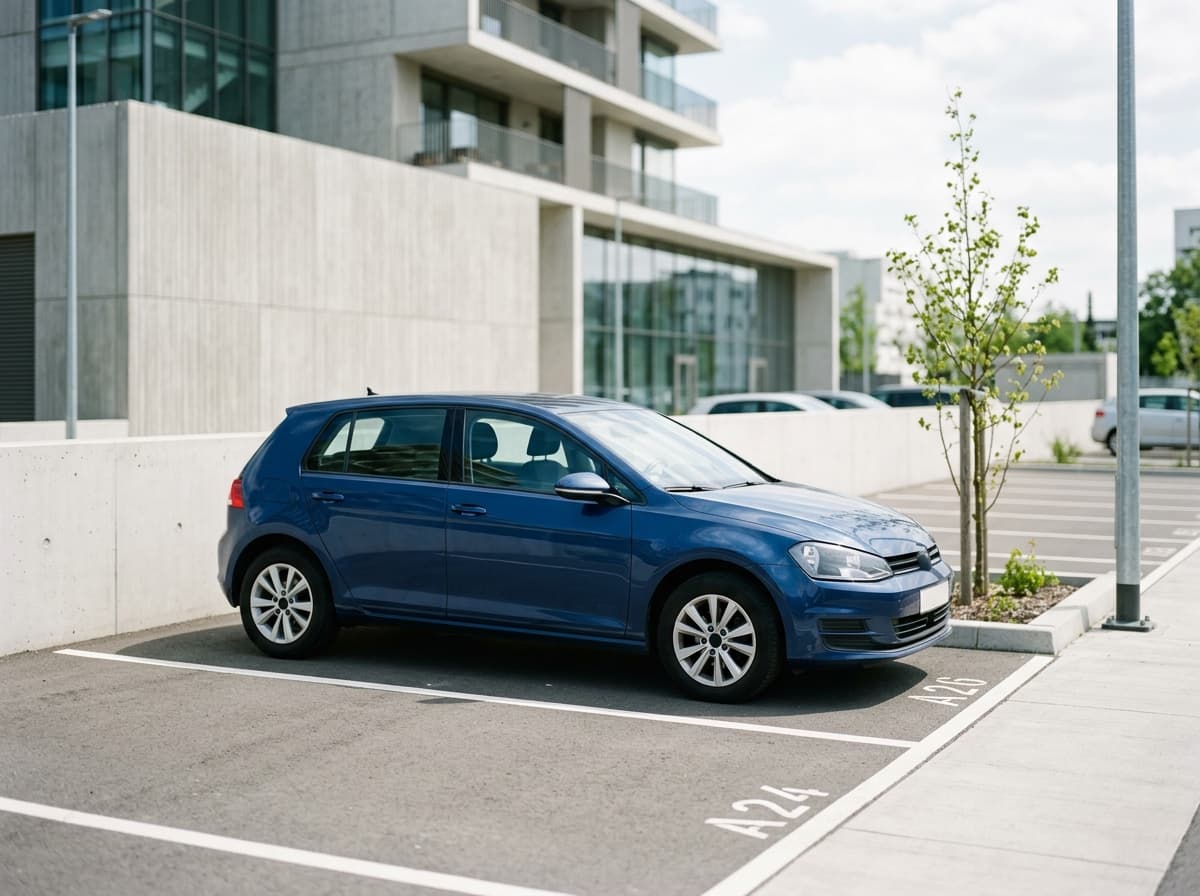
Both are excellent family city cars. The Clio edges ahead on boot and hybrid choice; the Fabia answers better if you prioritise interior space and low running costs.
The Clio has the biggest boot in the class (391 L), a polished finish and, above all, the full hybrid E-Tech powertrain, valuable for a family stringing together short urban trips. In town, the hybrid spends much of its time on electric power and melts fuel use, often under 4.5 L/100 km.
The Fabia plays another card: one of the roomiest cabins in the segment, clever storage and simple petrol engines, reputed to be robust and cheap to service. It has no full hybrid, but its 1.0 TSI engines stay frugal on the road. To sort several models on precise criteria, our city car comparator puts them side by side on price, boot and fuel use.
How much does a family city car cost to run in Belgium?
The list price says little about the real budget. The real cost of a city car is insurance and servicing, not just the catalogue price, and that's where a family should look before signing.
Insurance first. In Belgium, the premium depends heavily on the car's power and value. A base Sandero or Clio is cheaper to cover than a well-engined Polo or a 208 GT. For a family budget already loaded with fixed costs, that monthly gap matters as much as the purchase-price difference.
Fuel next. A family often drives in short trips — school, shopping, activities — the worst case for a conventional petrol engine. That's exactly where a hybrid like the Clio E-Tech or the Toyota Yaris takes back the lead, dropping to around 4 L/100 km in town. Over 15,000 km a year, a few hundred euros of fuel are decided there. Test-Achats and Le Moniteur Automobile regularly publish running-cost figures that help you decide.
City car or small SUV for a family?
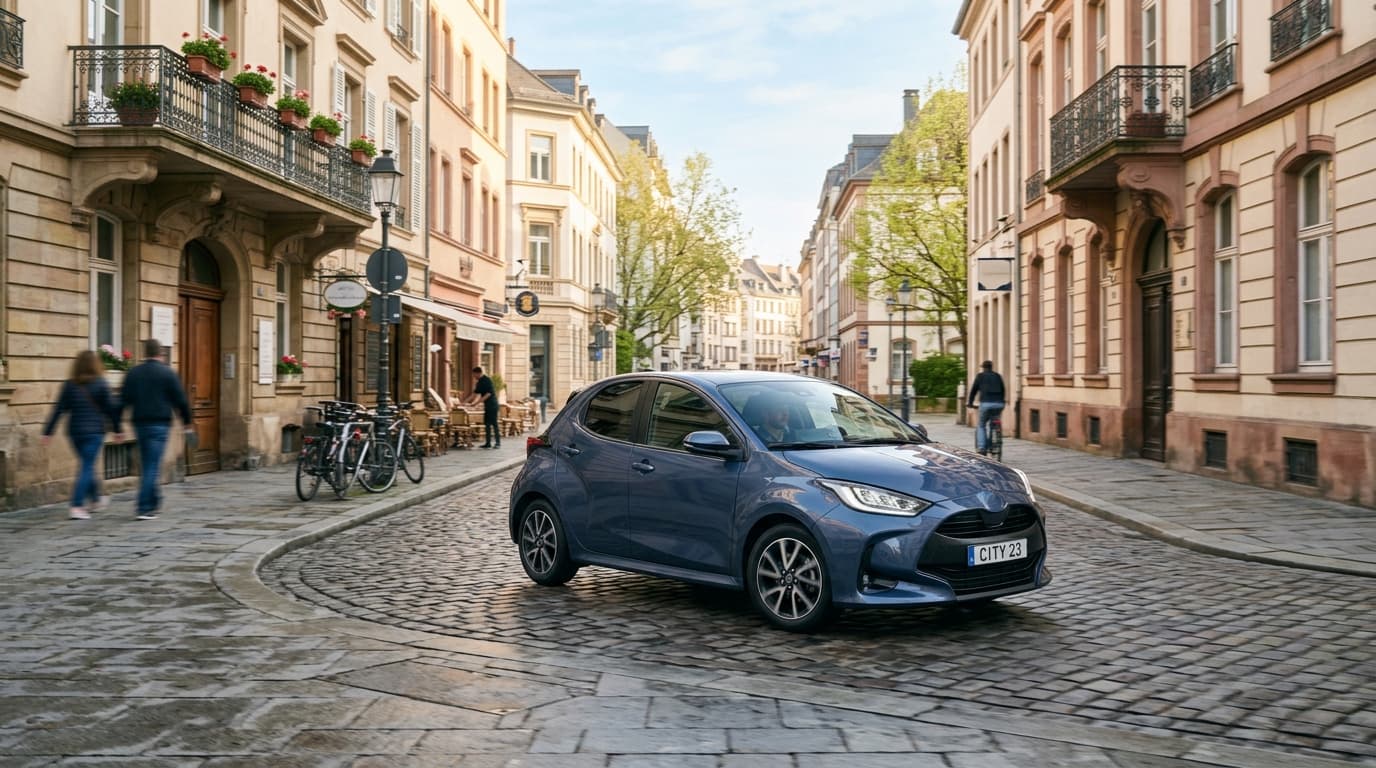
For a family of four in urban and suburban use, a city car is plenty: easier to park, cheaper to buy and to insure. The small SUV only makes sense if you often carry a lot or value a high driving position.
The urban SUV appeals with its ground clearance and easy access, handy for settling a child into a seat without hurting your back. But it comes at a price: a few thousand euros more, higher fuel use because of the weight and size, and an insurance premium that's often steeper.
Conversely, a good city car delivers 80 to 90% of a small SUV's practicality for a much lower budget. For a young family driving mostly in town, the call almost always leans toward the city car. If you're just starting out or looking for an affordable first family car, our guide on the best city car for a young driver details how insurance shapes the budget.
Which family is each city car made for?
Each model targets a different family profile. The Renault Clio is the most versatile: big boot, frugal hybrid, good resale — the default choice for an urban family that drives a lot. The Škoda Fabia suits those who want the most interior space without moving up a class.
The Volkswagen Polo reassures families regularly carrying growing children, thanks to slightly more generous rear seats. The Dacia Sandero remains the budget champion: perfect as a first family car or a second vehicle, as long as you accept a plain finish. The Peugeot 208 appeals with its style and screen, provided you can live with a tighter boot.
In short: the family city car that suits you depends mostly on your children's ages and your monthly budget, not the spec sheet. Look at your Saturday boot and your insurance premium first. To decide between models, our ranking of the best city cars details each one, and the city car quiz points you in the right direction in a few questions.
Guides d’achat comparator
Compare all guides d’achat side by side.
Compare now →
Frequently asked questions
Léa suit le marché des petites voitures depuis 2014. Basée à Liège, elle roule au quotidien en citadine et passe ses week-ends à comparer autonomies réelles, coffres et coûts d’entretien. Elle teste surtout ce qu’on utilise vraiment en ville : créneaux serrés, recharge en copropriété, trajets courts et budget assurance jeune conducteur.