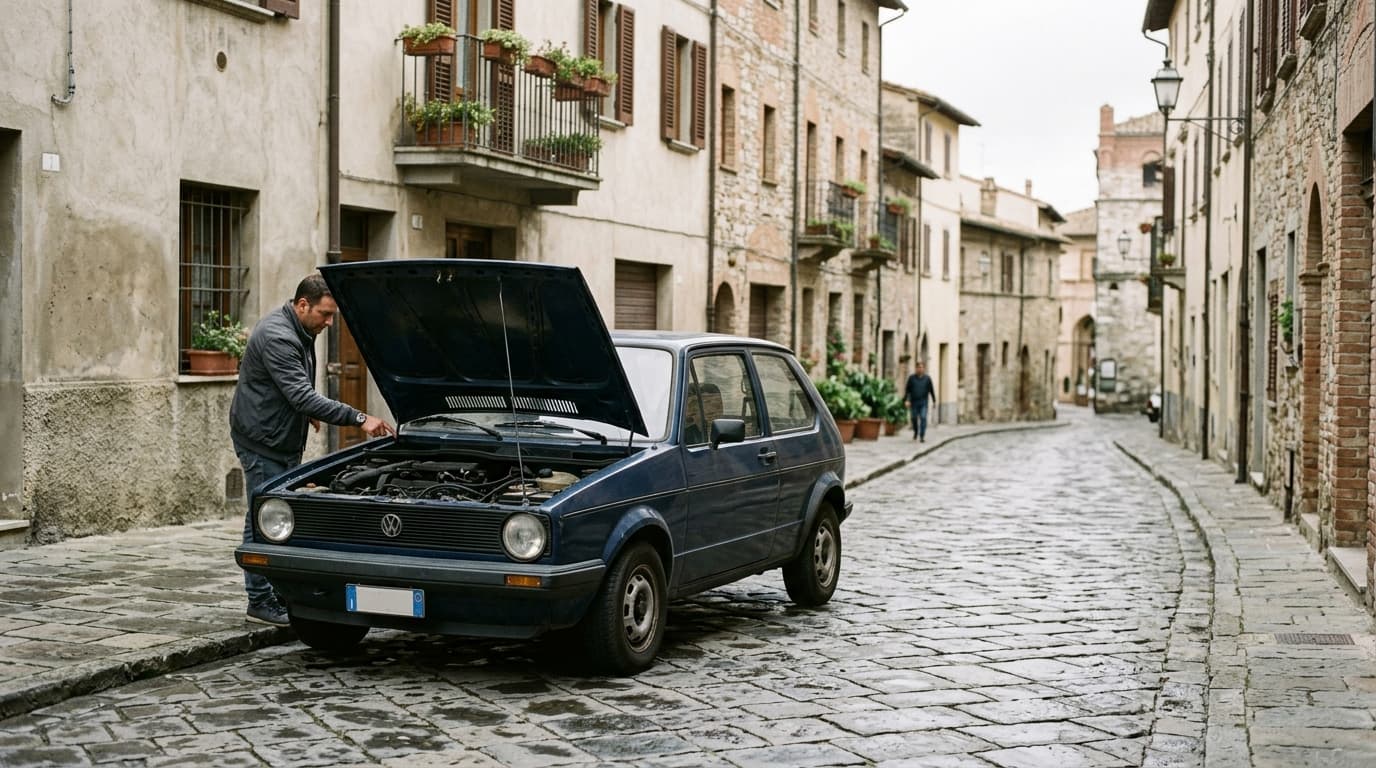
The Mazda 2 and the small Škoda, Volkswagen and Suzuki models come out on top of the two major European reliability surveys published in late 2025 and spring 2026. The recent Toyota Yaris disappoints, and not because of its engine: its 12V battery copes poorly with short trips. In town, reliability is decided there first.
Which city car breaks down least?
The Mazda 2, followed by a small group of ordinary city cars. No Belgian source publishes model-by-model breakdown statistics, and both European references come from Germany. They do not measure the same thing: the TÜV Report counts serious defects found at the German roadworthiness test, while the ADAC (the German motoring club) counts roadside breakdowns.
| Model | TÜV Report 2026 (serious defects at inspection) | ADAC breakdown statistics 2026 |
|---|---|---|
| Mazda 2 | 2.9 % at 2 to 3 years, best score of all cars | among the most reliable small cars |
| Škoda Fabia | n/a | among the most reliable small cars |
| Volkswagen Polo | n/a | among the most reliable small cars |
| Suzuki Swift | n/a | among the most reliable small cars |
| Toyota Aygo, Volkswagen up!, Škoda Citigo | n/a | among the most reliable city minis |
| Dacia Spring | 13.0 % at 2 to 3 years, among the worst | among the most reliable city minis |
| Toyota Yaris (2021 to 2023) | n/a | among the least reliable in its class |
| Renault Clio (12 to 13 years) | last in its age group | n/a |
n/a: model not included in the results made public for that survey.
The TÜV analysed 9.5 million inspections carried out between July 2024 and June 2025, and the average for two to three-year-old cars stands at 6.5 %. The Mazda 2 therefore does twice as well as the average for its age. The ADAC tracked breakdowns across 158 models from 27 brands, and its detailed 2026 results rank models by year of registration, which shows that the same car can be excellent in one model year and mediocre in the next.
Why has the recent Toyota Yaris lost its edge?
Because of a battery. The Yaris reputation was built by earlier generations, and it is still deserved on the mechanical side. The problem with Yaris and Yaris Cross models registered from 2021 to 2023 is electrical: the ADAC writes that the cause of their breakdowns is a faulty starter battery, and that the corrective measures Toyota has rolled out since February 2024 do not yet show in the 2025 figures.
Toyota has responded. Since November 2024 production, the Yaris and Yaris Cross get a bigger battery designed for drivers who do low mileage, and the manufacturer says its warranty data show a drop of more than 90 % in cases on those cars. The MyToyota app has monitored the 12V battery since October 2025 and warns you when it weakens.
A 2022 Yaris is not one to run from.
It simply needs a battery that has been tested, or already replaced, and the production date written in the service book becomes the first thing to check before you talk price.
The 12V battery, the leading cause of breakdowns in town
45.4 %.
That is the share of breakdowns caused by the starter battery in the ADAC's 2025 statistics, against 35.7 % ten years earlier, far ahead of engine and engine electronics problems (21.8 %). The ADAC puts the average life of a battery at five to six years. It also notes that many recent cars break down well before that, because the on-board electronics draw power even when parked. A ten-minute trip does not give back what the start took. A city car that sleeps in a residents' parking bay and only does the school run, the supermarket and Wednesday sports club stacks up exactly those two handicaps, and it is for that precise profile that Toyota had to rethink the battery on its Yaris.
Five habits are enough to avoid most of these breakdowns:
- a proper 30 to 40-minute drive every two or three weeks, on a fast road, recharges the battery better than ten short trips;
- from four years old, a battery test at every service, which takes a few minutes at the garage;
- a laboured start in cold weather, often the first sign of a battery nearing the end of its life;
- a maintenance charger if the car stands still for more than a week and a socket is within reach of the parking spot;
- on a hybrid, the same vigilance: the large traction battery does not replace the small 12V battery.
How can a city car be reliable and still fail inspection?
The Dacia Spring shows how. The ADAC ranks it among the city minis that break down least, while the TÜV gives it 13.0 % serious defects at two to three years old, one of the worst scores in the report. It starts, but its running gear and brakes get failed. The TÜV explains this profile across electric cars in general: the traction battery weighs heavily on the suspension, and regenerative braking uses the brakes so little that the discs deteriorate.
The Renault Clio illustrates the other end. Cars aged 12 to 13 years, so fourth generation, finish last in their age group in the TÜV Report, according to the ADAC summary. On a Clio of that age, a visit to a garage before buying is worth more than any ranking.
What should you do in your situation?
| Your case | What to do |
|---|---|
| You are buying new and keeping the car 8 to 10 years | Look at the warranty as much as the rankings: 7 years at Kia and Suzuki (Swift), up to 10 years at Toyota with annual servicing in its network |
| You are looking at a used 2021 to 2023 Yaris or Yaris Cross | Ask whether and when the 12V battery was replaced; if not, factor its replacement into the negotiation |
| You drive under 5,000 km a year in town | Plan a regular longer drive, or a maintenance charger if you have a socket |
| You are considering an entry-level electric car | Have the brakes and running gear checked before buying, that is where small electric cars get failed |
| You are buying a city car over 12 years old | Have it inspected by an independent garage before you sign |
| You are buying from a private seller | The legal guarantee of conformity only applies to sales by a professional: only the remaining manufacturer warranty protects you |
How much warranty is left on a used city car?
Far more with some brands than others, and for anyone keeping a car ten years it is a reliability criterion in its own right. The calculation below assumes a city car bought at four years old and urban use of 8,000 km a year.
| Warranty in Belgium | Duration and cap | Left on a 4-year-old car | Condition |
|---|---|---|---|
| Toyota Relax (Aygo X, Yaris) | 10 years or 185,000 km | up to 6 years | annual service in the Toyota network |
| Kia (Picanto) | 7 years or 150,000 km | 3 years | transferable if the car has been serviced regularly |
| Suzuki (Swift) | 7 years, 150,000 km maximum | 3 years | car delivered new by Suzuki Belgium and serviced in its network |
| Hyundai (i10) | 5 years, unlimited mileage | 1 year | transferable to the next owner |
At 8,000 km a year, the mileage cap never comes into play: it would take 23 years to reach the 185,000 km of the Toyota Relax warranty and almost 19 years for Kia's 150,000 km. Only the duration counts. One detail deserves a read before signing: the Kia warranty lists exceptions, notably for the battery, which is the very part that causes the most breakdowns in town.
Does the Belgian roadworthiness test catch these weaknesses?
Only partly. At AutoSécurité, the country's largest inspection operator, 22 to 23 % of vehicles presented do not leave with an immediate green light, according to figures reported by L'Avenir in June 2026. In 2025, immediate refusals came mainly from tyres with exposed carcass, insufficient braking and broken suspension springs, and a re-test costs €16.50. The test judges how safe the car is, not how likely it is to refuse to start on a January morning.
The schedule now depends on your region. Since 1 September 2026, Flanders only calls in cars over four years old every two years, and allows two months to repair after a red card. Wallonia keeps the annual test from the fourth birthday and Brussels also keeps its framework, as detailed by the Moniteur Automobile. A ten-year-old city car registered in Flanders can therefore go two years without an inspection, which makes regular servicing at the garage all the more important.
Should you pay more for a brand known for reliability?
Rarely. The best performers in both surveys are cars priced like the rest of the segment. To compare them on everything else, see our ranking of the best city cars and the comparator, then our guides to the low-mileage used city car and to how much a city car costs per year.
Citadines pas chères comparator
Compare all citadines pas chères side by side.
Compare now →
Frequently asked questions
Léa suit le marché des petites voitures depuis 2014. Basée à Liège, elle roule au quotidien en citadine et passe ses week-ends à comparer autonomies réelles, coffres et coûts d’entretien. Elle teste surtout ce qu’on utilise vraiment en ville : créneaux serrés, recharge en copropriété, trajets courts et budget assurance jeune conducteur.