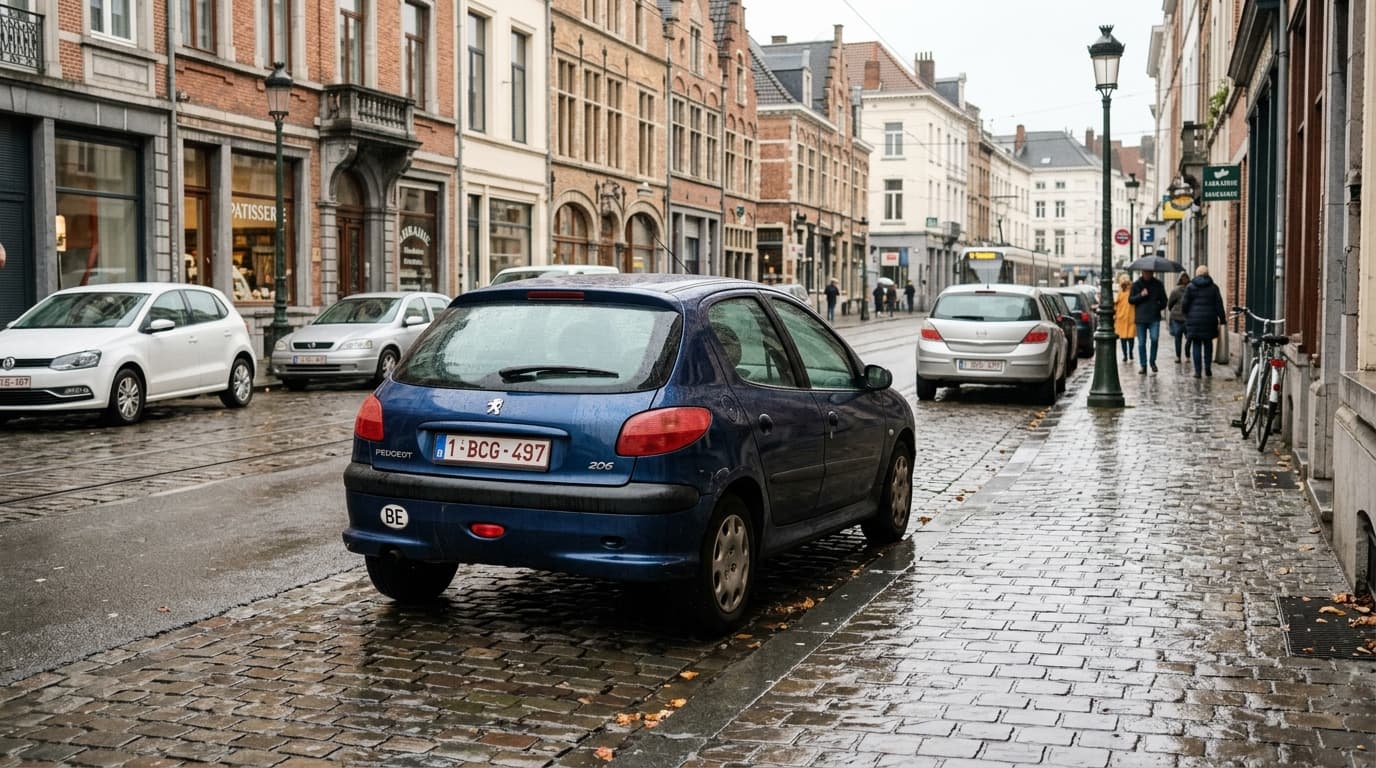
No, not in itself. On a city car, low mileage is the norm for the segment rather than a stroke of luck: a car that never leaves town covers 6,000 to 9,000 km a year, and every one of those kilometres is driven from a cold start. The number on the clock means nothing without the Car-Pass that comes with it.
Is low mileage a good sign on a city car?
Rarely. On the small-car segment it signals, first of all, purely urban use, which is the harshest wear profile for a modern engine, and sometimes it signals an odometer that has been rolled back.
French buying guides have been repeating for fifteen years that under 10,000 km a year you have a good deal. That rule was written for saloons doing motorway runs, and it turns upside down on a Renault Clio or a Volkswagen Polo that has never been past the ring road. An engine that does not reach operating temperature burns fuel poorly, never dries out its exhaust and never fully recharges its battery.
One thing the classified ads never mention. A city car with 45,000 km after seven years has not been spared: it has been started cold several thousand times, which is a very efficient way of wearing out an engine without moving the odometer.
Mileage benchmarks by age, built on Belgian figures
In 2025, the average used vehicle for which a Car-Pass was issued in Belgium was 9.8 years old with 107,127 km on the clock. Divide those: 10,931 km a year. The fleet actually on the road runs closer to 14,000 or 15,000 km a year.
| Age of the city car | Town only (7,000 km/yr) | Mixed use (12,000 km/yr) | Belgian average at resale (10,931 km/yr) |
|---|---|---|---|
| 3 years | 21,000 km | 36,000 km | 33,000 km |
| 5 years | 35,000 km | 60,000 km | 55,000 km |
| 8 years | 56,000 km | 96,000 km | 87,000 km |
| 10 years | 70,000 km | 120,000 km | 109,000 km |
| 12 years | 84,000 km | 144,000 km | 131,000 km |
The table reads both ways. A city car sitting in the left-hand column is not a golden find, it is a town car, and it needs to be inspected as one. A city car falling clearly below that left-hand column raises a question, and that question deserves a written answer.
Why do short trips damage more than they wear?
Because classic mechanical wear depends on kilometres, while chemical and electrical degradation depends on the number of cold starts. An urban city car piles up the second without accumulating the first.
Five components absorb the difference. The battery first, which never fully recharges on a ten-minute trip and gives up at four or five years instead of seven. Then the oil, diluted by repeated cold starts, which loses its lubricating power before the service book says so. On a diesel, the particulate filter no longer regenerates and clogs, which explains a good share of the failures at the Belgian roadworthiness test on small urban diesels. The clutch takes the hill starts. And the brake discs, barely used and often damp, pit with rust around the edges.
None of those faults shows up on an odometer. All of them show up on a test drive.
1,466 odometer frauds in 2025, and where they cluster
Car-Pass recorded 1,466 cases of odometer fraud in 2025 across 855,169 documents issued. The phenomenon stays marginal, but it is not spread evenly: 923 cases involved domestic sales, or 0.12 % of the total, and 543 involved imported vehicles, or 0.50 %.
A ratio of one to four. Given that 12.7 % of the Car-Pass documents issued cover an imported vehicle, a German or Dutch city car advertised well below the Belgian market price deserves a much slower reading of its history. The reason is simple: the Car-Pass only traces readings from the point the vehicle entered Belgium, and everything before that stays invisible.
When fraud is established, the odometer is rolled back by 79,379 km on average. On a ten-year-old city car, that means erasing seven years of urban use.
How do you read a Car-Pass in five minutes?
The Car-Pass is the compulsory Belgian document listing the successive odometer readings recorded at every visit to a roadworthiness centre, a garage or a tyre centre. Since 1 January 2024, motor-trade professionals must also report the work they carried out, so the document now carries the service history alongside the mileage.
Three readings cover the essentials.
The progression of the readings first: it should be steady. A 40,000 km jump between two visits a year apart on an urban city car does not add up, and a long stretch with no reading at all is a blind spot the seller should explain. Then the line of works carried out, which tells you whether the timing belt, the clutch or the battery have been replaced, and when. Finally the Euro emission standard, printed on the document, which decides access to the low emission zones.
That last line matters especially in town, and it does not read the same way depending on where you live. A Euro 5 diesel has been barred from Brussels since 1 January 2026, it still drives in Antwerp and Ghent until the Flemish tightening of 1 September 2027, and it meets no restriction at all in Wallonia, which has no LEZ. The region-by-region detail is in our guide to the low emission zones of Brussels, Antwerp and Ghent.
One last reflex, free and almost never used: outstanding manufacturer recalls can be checked with the chassis number on the public Car-Pass service. In 2025, 13.2 % of the documents issued flagged at least one.
How do you test drive a city car in urban conditions?
A ten-minute run on a main road reveals nothing about the faults of a town car. You have to reproduce the use it has endured, and that takes half an hour.
- Arrive with the engine cold, and insist on it. Ask the seller not to warm the car up. A hot engine hides a tired starter, a weak battery, blue smoke at idle and the pulley noise that vanishes after two minutes. If the car is already running when you arrive, postpone the test.
- Listen for thirty seconds at a standstill. Windows down, air conditioning off and then on. The idle should stay stable, with no metallic knock when the compressor engages.
- Do a genuine twenty-minute urban loop. Traffic lights, speed humps, cobbles if you have any nearby, two or three hill starts. You are looking for a clutch that slips on pick-up, suspension noise over bumps and steering that does not self-centre.
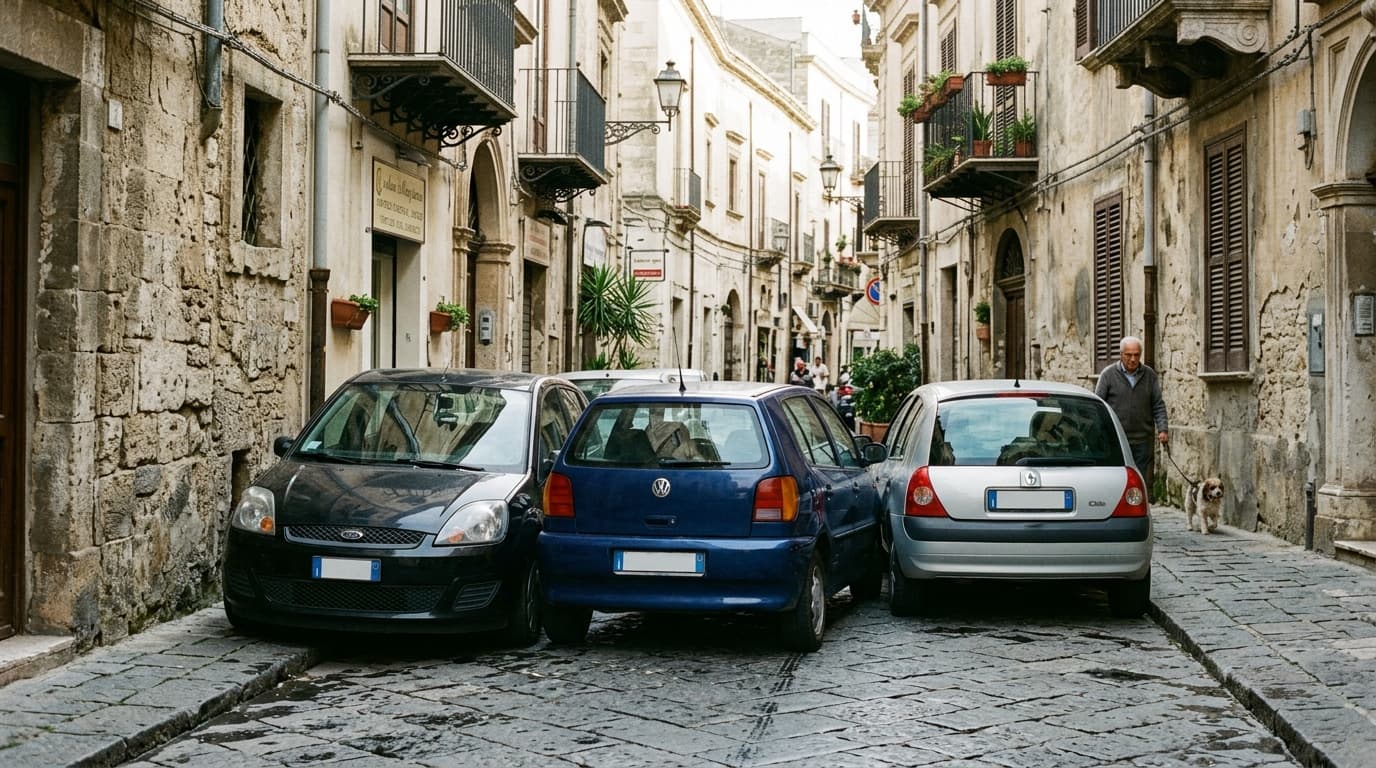
- Do three parallel parking manoeuvres and a full reverse. A worn driveshaft clicks on full lock, and it is the single most common fault on a city car that spent its life parking. While you are at it, look at the state of the wheel rims and sills.
- Finish with five minutes at 90 km/h. On a faster stretch, vibration through the steering wheel betrays warped discs, and body shake points to worn bushings. On a diesel, it is also the only moment when the particulate filter can attempt a regeneration.
The Touring used car buying guide usefully covers the administrative side of the transaction.
What do these checks cost, and how long do they take?
Next to nothing, which is what makes skipping them so absurd.
| Check | Where | Time | Cost to the buyer |
|---|---|---|---|
| Read the Car-Pass | handed over by the seller | 5 min | €0 (€11.10 incl. VAT, paid by the seller) |
| Verify the document is authentic | car-pass.be | 2 min | free |
| Outstanding manufacturer recalls | public.car-pass.be, with the chassis number | 2 min | free |
| Euro standard and LEZ access | Car-Pass and box V.9 of the registration certificate | 3 min | free |
| Test drive in urban conditions | starting from the seller's home | 30 to 40 min | free |
| Independent pre-purchase inspection | garage or inspection bureau | 1 to 2 h | ask for a quote, no single public rate in Belgium |
The Car-Pass must be less than two months old on the day it changes hands. A document issued six months earlier is not acceptable, however complete it looks.
Five signals that should bring the price down
They do not condemn the car. They justify negotiating, or asking for an invoice before you sign.
- A gap of more than two years with no reading on the Car-Pass, on a car supposedly driven every day.
- The original battery still fitted after five years on a town car: budget for its replacement.
- Brake discs pitted all the way round, the mark of a vehicle left standing outdoors for long spells.
- A service book based on mileage rather than dates on an urban city car: at 7,000 km a year, an oil change quoted every 20,000 km happens once every three years, which is far too long.
- A Euro standard that shuts you out of your own municipality, because it will shut down the resale too.
One closing remark, valid across the segment. The purchase price of a used city car is the smallest part of what it will cost you: the breakdown item by item is in our article on how much a city car costs per year, and real urban consumption in the one on the city car that uses the least fuel. To pick the model, our ranking of the best city cars and the city car comparator put them side by side, and the quiz points you somewhere in four questions. Belgian fleet trends are published by the FPS Mobility.
Citadines pas chères comparator
Compare all citadines pas chères side by side.
Compare now →
Frequently asked questions
Léa suit le marché des petites voitures depuis 2014. Basée à Liège, elle roule au quotidien en citadine et passe ses week-ends à comparer autonomies réelles, coffres et coûts d’entretien. Elle teste surtout ce qu’on utilise vraiment en ville : créneaux serrés, recharge en copropriété, trajets courts et budget assurance jeune conducteur.