
A battery maintainer stops the battery from dying; a jump starter brings it back to life on the morning it has died. For a city car that sleeps in a garage, the first is enough. For a city car parked on the street, it is often unusable, for lack of a socket and because a cable across the pavement is banned almost everywhere in Belgium. The jump starter then becomes the logical purchase.
Two devices, two moments in a battery's life
They sit on the same shelf, but they do not do the same job.
A battery maintainer (a smart trickle charger) plugs into a 230 V socket and stays connected to the battery for days or weeks. It charges gently, then monitors the voltage and makes up for what the car draws when parked. It acts before the breakdown.
A jump starter, called a booster in Belgium, is a portable lithium battery with two clamps. It delivers the current the starter motor needs in a few seconds, then you unplug it and drive off. It acts after the breakdown, and it recharges nothing.
| Criterion | Battery maintainer | Jump starter |
|---|---|---|
| When you use it | before the breakdown, as prevention | on the day of the breakdown |
| Needs a 230 V socket | yes, near the car | no, you recharge it at home over USB |
| How long it works | several hours to several weeks | a few seconds |
| Effect on the battery | recharges it and extends its life | none, it stays flat |
| Usable on the street | in practice no (cable banned) | yes |
| Reference models | CTEK MXS 5.0, NOCO GENIUS5 | NOCO GB20, NOCO GB40 |
| Price checked in Belgium | €69.99 (GENIUS5) | €99.99 (GB20) |
Both prices were checked on bol.com on 30 September 2026. We have not tested any of the devices mentioned: the specifications come from the official CTEK and NOCO product sheets.
Why does a city car's battery die in town?
Because it works hard and rests little. A faulty or flat battery remains the leading cause of breakdowns in Germany, with 45.4% of the ADAC's 3,691,813 call-outs in 2025, according to the club's annual statistics as reported by auto motor und sport. No Belgian body publishes such a detailed count, but the causes are the same on this side of the border.
Cities combine the battery's three enemies: frequent starts, trips too short for the alternator to give back what the starter took, and whole days spent parked. The ADAC says so plainly in its guide to charging car batteries: in winter, short trips are not always enough to keep the battery charged.
Standing still costs too. In its standby current test on 25 cars, the club measured between 5 and 40 mA on locked vehicles with the doors shut. Do the maths over 24 hours: 0.12 to 0.96 Ah lost every day. On a 50 Ah battery, a common order of magnitude for a petrol city car, the hungriest car in the test would have drained a fifth of its reserve in ten days of parking, before the first cold start. A boot left ajar is far worse: up to 0.45 A, and starting problems after as little as five days.
The 12 V battery of hybrids does not escape the problem. It is precisely what let the 2021 to 2023 Toyota Yaris down in the ADAC breakdown statistics, as detailed in our investigation into the most reliable city car.
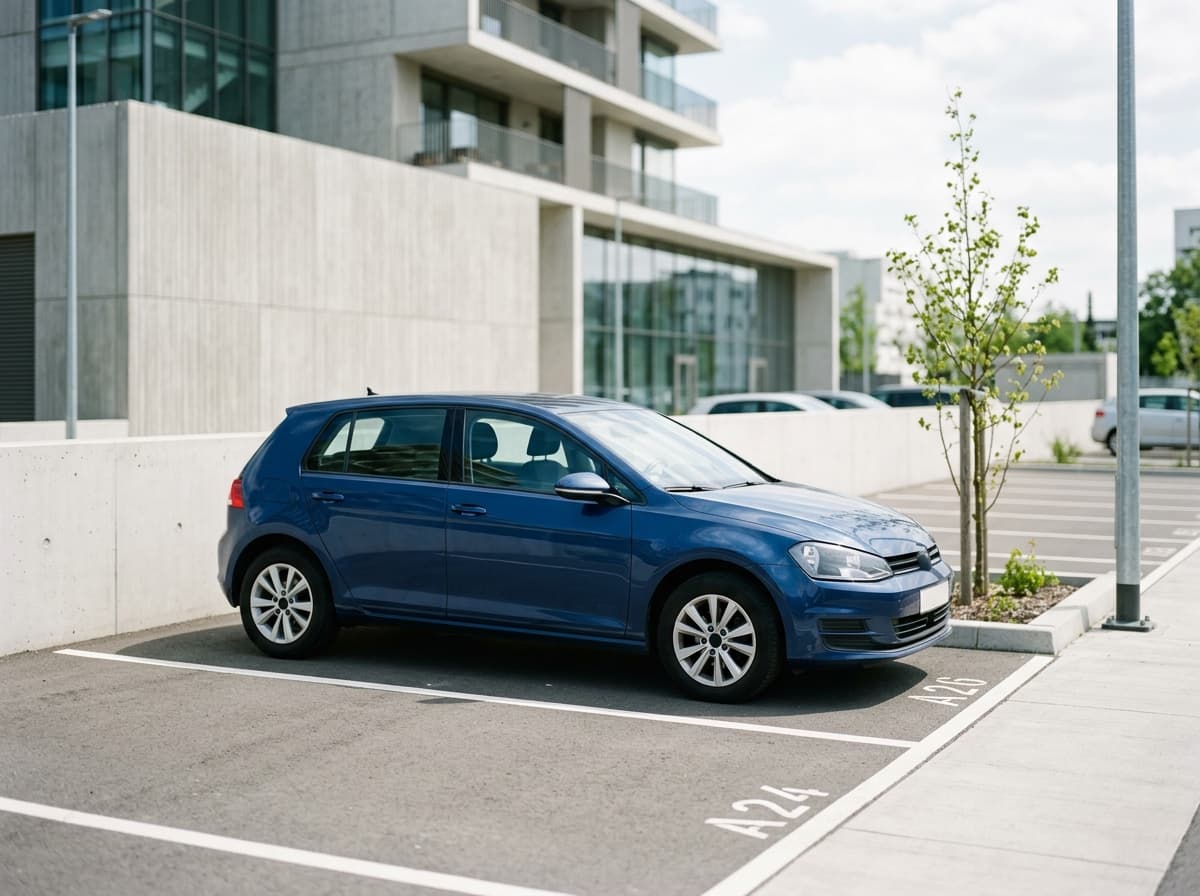
Where can you plug in a maintainer when you park on the street?
Nowhere, in most cases. The whole debate between the two devices is settled here, and it is a question of pavement, not technology.
| Situation | Maintainer possible? | Rule and source |
|---|---|---|
| Garage, lock-up or private driveway (all three regions) | yes | your socket, your property |
| Residential car park | sometimes | co-ownership rules and an available socket |
| Street, Brussels | no | cable across the pavement banned by the Highway Code and the general police regulation, as restated at Uccle council on 23 April 2026 |
| Street, Wallonia | in principle no | article 7.3 of the Highway Code; 57% of communes refuse outright, 43% decide case by case (UVCW, April 2024) |
| Street, Flanders | in principle no | most communes ban loose cables; Deinze offers grooved paving slabs, paid for by the resident (VRT, 22 February 2024) |
In Brussels, the Uccle alderman questioned at the municipal council mentions a warning letter, then administrative penalties for repeat offenders. In Wallonia, the Union of Walloon Cities and Communes (UVCW) found that 74% of communes had already received a request, and Nivelles banned cables on and even under the pavement in October 2025. The question arose with electric cars, but it applies just the same to a 12 V battery charger: a wire across the pavement is still a wire that trips a pedestrian.
That leaves removing the battery to charge it at home. On a recent city car with Stop & Start, I would not do it without a garage's advice: some cars then need their electrical management reset.
The jump starter, the on-street parker's tool
It fits in the glovebox, recharges from a USB port in your flat and needs nobody's permission.
For a city car, there is no point aiming high. The NOCO GB20 is rated at 500 A and starts petrol engines up to 4.0 litres, up to 20 times per charge, and recharges in about three hours over USB. A Volkswagen Polo 1.0, a Kia Picanto 1.0 or a Peugeot 208 1.2 PureTech are nowhere near that limit. Its big brother, the GB40, goes up to 1,000 A for 6.0-litre petrol and 3.0-litre diesel engines, extra power that is wasted on a three-cylinder.
Two constraints come with lithium chemistry. According to the NOCO user guide, the jump starter operates from -20 to +50 °C but only recharges between 0 and +40 °C: left in the car on a January morning, it will start the engine, but you recharge it indoors. And it slowly discharges on its own, so make a habit of checking its level every month.
Between the two families sits a hybrid device, the CTEK CS FREE: a 66 Wh portable battery that charges the car's battery without a mains socket, at up to 20 A, and revives a flat battery in about fifteen minutes according to the manufacturer. It is the only way to do genuine maintenance charging on the street. No Belgian retailer we checked on 30 September 2026 listed its price in euros.
Which charger for a Stop & Start battery?
One that has an AGM programme, and most recent models do. City cars with Stop & Start use an AGM or EFB battery, more tolerant of repeated starts but more demanding to charge.
The CTEK MXS 5.0 charges 12 V batteries of 1.2 to 110 Ah at 5 A, maintains up to 160 Ah, offers an AGM mode and a reconditioning mode, and comes with a five-year warranty according to CTEK's official product sheet. The NOCO GENIUS5 also charges at 5 A, in 6 and 12 V, up to 120 Ah, handles lithium batteries and carries a three-year warranty. For a city car battery, both are more than enough.
From €0 to €100: three budgets, three profiles
Sometimes the best buy is nothing at all. If you take at least one proper half-hour drive every two weeks and your battery is under four years old, the breakdown assistance included in your insurance policy or roadside membership already covers the bad morning.
| Budget | Purchase | Who it suits | Limit |
|---|---|---|---|
| €0 | nothing, a half-hour drive every two weeks | recent battery, regular use | does not protect against long periods off the road |
| about €70 | battery maintainer (NOCO GENIUS5, €69.99) | a city car that sleeps in a garage or driveway | useless without a socket next to the car |
| about €100 | 500 A jump starter (NOCO GB20, €99.99) | on-street parking, short trips | fixes the breakdown, does not heal the battery |
| more | portable charger (CTEK CS FREE) | a city car left on the street for weeks | clearly more expensive, price not checked in euros |
Prices checked on bol.com on 30 September 2026, subject to change.

Should you buy both?
Rarely. My verdict depends on one question: where does your city car sleep?
In a garage and barely used during the week, take the maintainer, plug it in on Sunday evening and forget about the battery. On the street, in Brussels as in Liège, take the jump starter, and add a longer drive every week, on the ring road or a main road, which will do the job no cable can. Both only make sense for a car that alternates between a garage and long spells parked on the street, a rare case in town.
Five mistakes that finish off a city car battery
- Leaving the car unused for three weeks in midwinter, then trying three failed starts in a row.
- Jump starting the car and driving two kilometres to the bakery, believing the battery is recharged.
- Forgetting the jump starter in the cabin in midsummer: the NOCO guide sets 80 °C as the absolute limit.
- Charging a Stop & Start AGM battery with an old charger that has no suitable programme.
- Keeping a battery that drops below 12.0 V a few days after a full charge: it is dead, not flat.
To put the battery into the total cost of your car, see our calculation of how much a city car costs per year. For the rules of the street where it sleeps, our guide to parking in Brussels covers zones and resident permits (carte riverain). And to choose a city car whose battery holds up, our ranking of the best city cars puts the models side by side.
Guides d’achat comparator
Compare all guides d’achat side by side.
Compare now →
Frequently asked questions
Léa suit le marché des petites voitures depuis 2014. Basée à Liège, elle roule au quotidien en citadine et passe ses week-ends à comparer autonomies réelles, coffres et coûts d’entretien. Elle teste surtout ce qu’on utilise vraiment en ville : créneaux serrés, recharge en copropriété, trajets courts et budget assurance jeune conducteur.