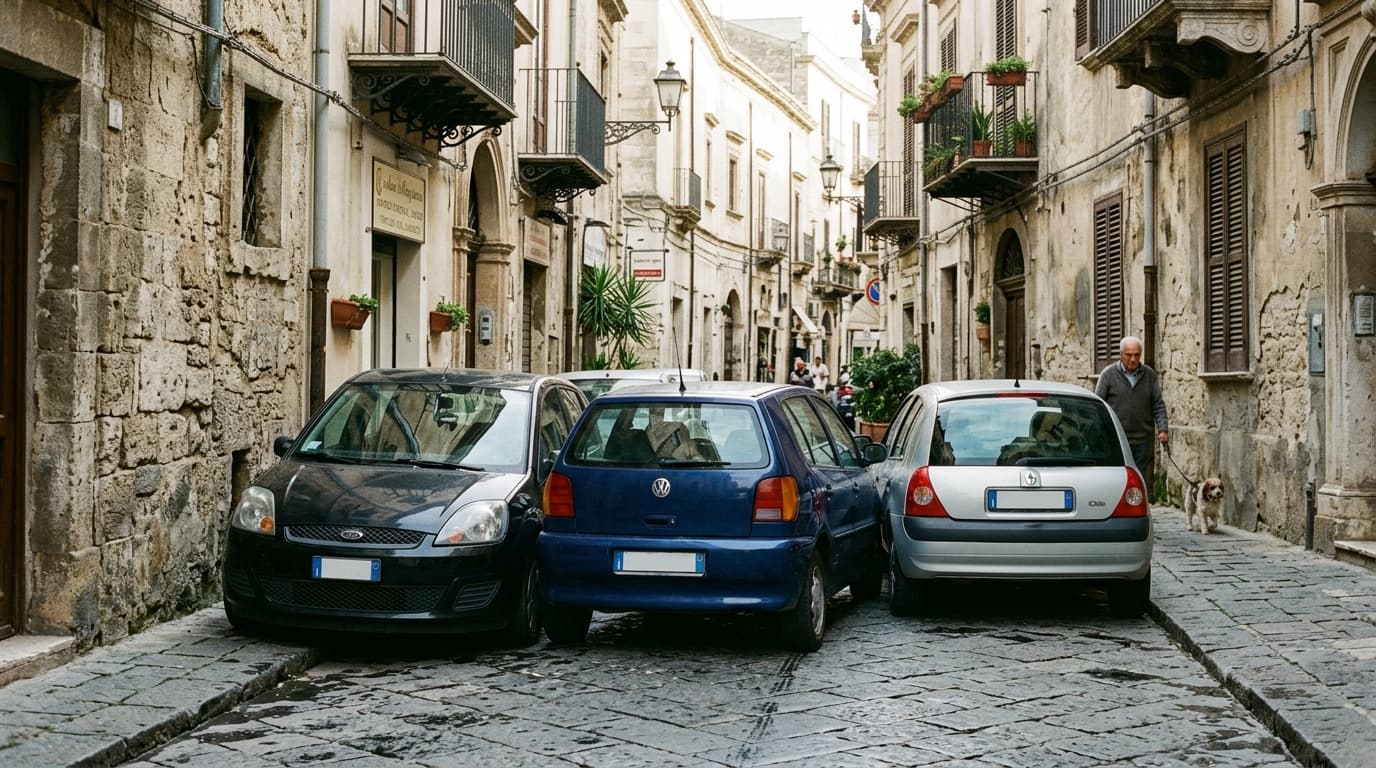
A city car is an A or B segment vehicle: under 4.20 m long, four or five seats, a small engine, a tight turning circle. Yet the label stretches across 52 cm between a Kia Picanto and a Renault Clio. Which is exactly why it is no longer enough to choose on.
What exactly is a city car?
A city car is a vehicle in the A and B segments of the European classification, designed for mainly urban use. Short body, modest engine, five doors in most cases, and a turning circle that lets you swing round in a residential street without a three point manoeuvre.
No legal text defines the term. It is a convention born in the motoring press, then picked up by manufacturers, dealers and classified ad sites. The segment classification sorts models by increasing size, from A to F: A for mini city cars, B for superminis, C for compacts such as the Golf or the Mégane. Below the A segment you enter heavy quadricycles, which fall under a different licence and registration category.
The word describes a use. The segment describes a size. The two no longer line up.
A segment or B segment: where is the line?
Around 3.80 m. Below that, people say mini city car, sometimes micro city car, A segment. Above it, supermini, B segment. The border appears in no rulebook, but it roughly holds, and the figures measured on models sold in Belgium show something else entirely.
| Model | Common label | Length | Width (excluding mirrors) |
|---|---|---|---|
| Kia Picanto | mini city car, A segment | 3.60 m | 1.60 m |
| Hyundai i10 | mini city car, A segment | 3.67 m | 1.68 m |
| Toyota Aygo X | mini city car, A segment | 3.70 m | 1.74 m |
| Volkswagen Polo | supermini, B segment | 4.05 m | 1.75 m |
| Peugeot 208 | supermini, B segment | 4.06 m | 1.75 m |
| Renault Clio VI | supermini, B segment | 4.12 m | 1.77 m |
| Volkswagen Golf (reference) | compact, C segment | 4.28 m | 1.79 m |
Two labels, seven cars, and a spread nobody advertises in the showroom window.
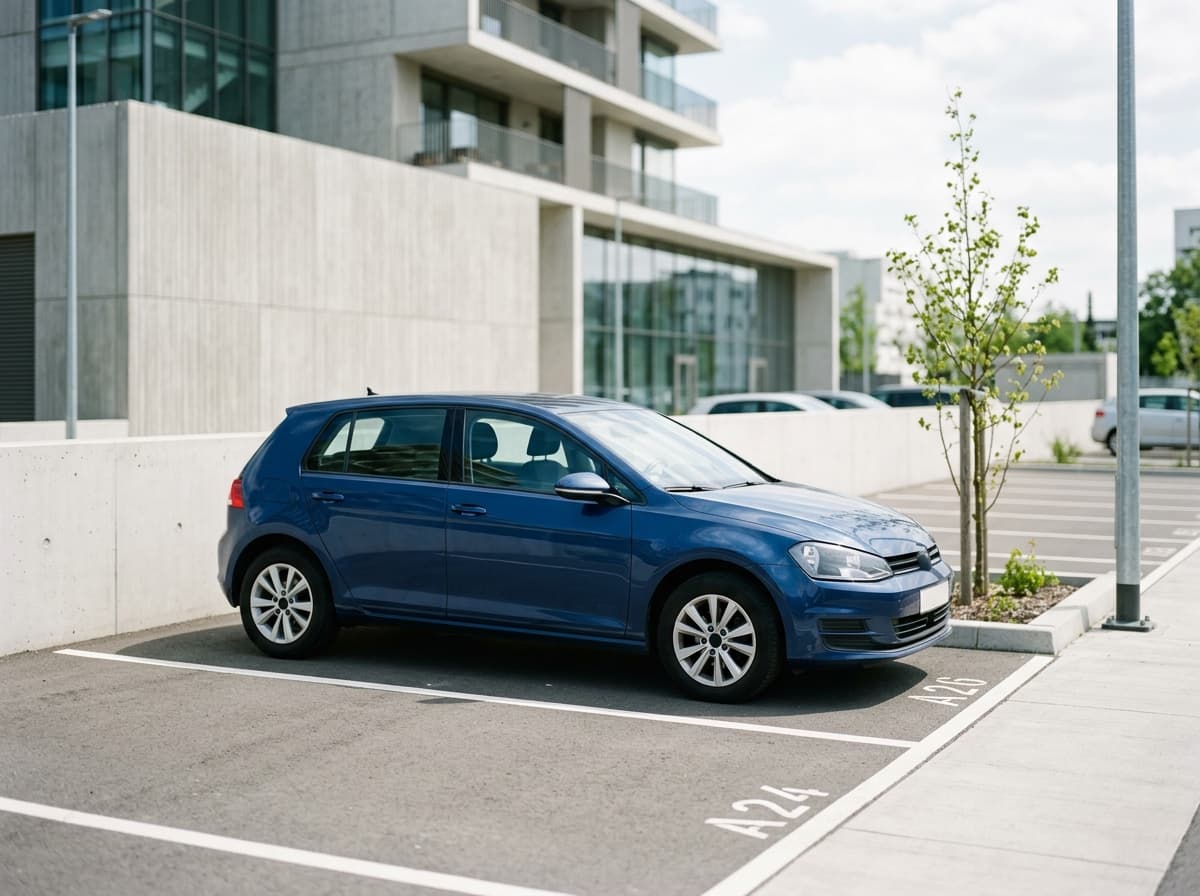
A Clio is now only 16 cm shorter than a Golf
Take the two extremes of that table and do the subtraction. A Renault Clio VI measures 4.12 m. A Kia Picanto, 3.60 m. Fifty two centimetres separate two cars the same salesperson will present to you as city cars, in the same row, under the same sign.
Now the other subtraction, the awkward one. That same Clio is only 16 cm shorter than a Volkswagen Golf, which has never been a city car and which nobody has ever sold as one. Put differently: the size gap inside the words « city car » is now three times larger than the gap between a city car and a compact. The label has stopped sorting anything.
Width tells the same story, in even more practical terms. Going from 1.60 m to 1.77 m means 17 cm more, so nearly 9 cm less clearance on each side when you slot into the same bay. Nine centimetres is the difference between opening your door normally and climbing out sideways. Then add the mirrors, which routinely stick out 15 to 20 cm per side and which nobody counts, and the manoeuvre changes in nature. At that point geometry decides for the driver.
I will put it plainly: if you are buying a small car in order to park it in town, the only line that matters on the spec sheet is length, and the second one is width. The segment comes a long way behind.
The segment is still the common currency of dealers and insurers
The objection is a serious one and deserves a serious answer. If the word no longer tells you the size, why does everyone keep using it?
Because it does something else. The segment is the market's unit of comparison: sales volumes are published by segment, manufacturers position their prices by segment, trade guides and used values are built by segment. A dealer telling you « that is B segment » is giving you a price bracket, an equipment level and a customer profile, not a length. In that register the label still works perfectly well.
It also keeps a practical use for the buyer: it narrows the search. Filtering on « city car » on a classifieds site instantly removes estates, MPVs and large saloons. That is useful rough sorting. The trouble starts when you stop there.
City car or urban SUV: which one parks better?
The city car, and the gap is not where you would expect. An urban SUV often sits on the same platform as a supermini and comes in at a similar length. Height, width and rear visibility, on the other hand, change sharply.
The five figures worth checking on the spec sheet, in this order:
- overall length, which decides whether the parallel park works at all;
- width excluding mirrors, then width with mirrors unfolded, almost never advertised and yet decisive in an older underground car park;
- height, to compare against the clearance posted at the entrance of the car park you use most often: most city cars stay under 1.50 m, plenty of urban SUVs do not;
- kerb to kerb turning circle, which governs the U turn in a narrow street;
- rear visibility, which appears on no spec sheet and has to be judged on a test drive, with the seat set to your driving position.
The real cost of the wrong size is scuffed wheels and scraped bumpers, not fuel consumption.
Three doors or five doors, does it matter in town?
Barely, because the market already decided for you. Three door bodies have all but vanished from the B segment, and the few survivors resell for less than their five door equivalents. On a car used in town, where the rear bench gets loaded more often than people expect, the question has largely stopped arising.
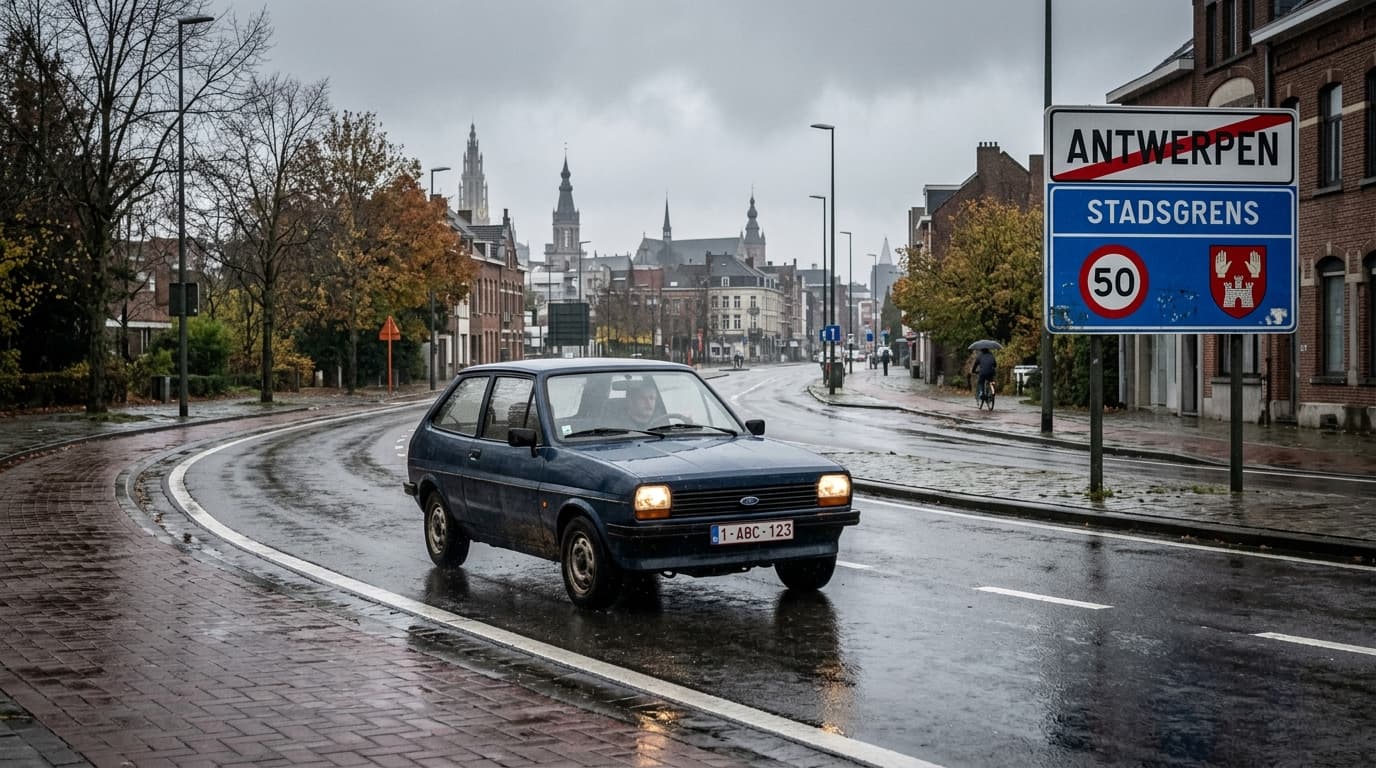
In Belgium, the authorities have never heard of a « city car »
Here is the anchor missing from every car glossary written elsewhere. The term has no administrative existence in this country whatsoever, and three regimes prove it.
The registration certificate issued by the Vehicle Registration Directorate (DIV, the Belgian vehicle registration body) carries no segment. It carries a European category, M1 for a passenger car, exactly the same one for a Picanto as for a large family estate. Your city car and a five metre saloon are administratively identical.
Road tax, meanwhile, is calculated on fiscal horsepower and engine capacity in Wallonia and Brussels, and on CO₂ and the Euro standard in Flanders. Two city cars of similar size can therefore pay very different amounts depending on their powertrain and on your region, and the model by model breakdown sits in our article on how much a city car costs per year.
Low Emission Zones (LEZ), finally, look only at the Euro standard and the fuel. A 3.70 m diesel is turned away from Brussels while a recent petrol compact drives straight in, and Brussels Environment publishes the full timetable of restrictions. Size plays no part in the equation. We covered the three cities concerned and the Walloon exception in our guide to the Low Emission Zones of Brussels, Antwerp and Ghent.
That leaves parking, the one thing in Belgium where your car's size genuinely counts, and where no municipal rulebook mentions the word either: charges and resident permits (carte de riverain) are set per vehicle, never per segment.
If what you actually want now is which one to buy rather than what the word means, our ranking of the best city cars sorts models on measured criteria, the city car comparator puts them side by side, and the quiz points you somewhere in four questions. And take a tape measure to the dealership: measuring the car you like, then the space where it will sleep, remains the single most useful thing you will do in the whole purchase.
Guides d’achat comparator
Compare all guides d’achat side by side.
Compare now →
Frequently asked questions
Léa suit le marché des petites voitures depuis 2014. Basée à Liège, elle roule au quotidien en citadine et passe ses week-ends à comparer autonomies réelles, coffres et coûts d’entretien. Elle teste surtout ce qu’on utilise vraiment en ville : créneaux serrés, recharge en copropriété, trajets courts et budget assurance jeune conducteur.